


Faith. Family. Based
Faith. Family. Based
Gas vs. Electric Furnace: Which Is the Best Choice for Salem’s Weather?
Choosing a new furnace is one of the most important decisions for a homeowner preparing for winter. With many systems to consider, the key question often becomes: should you go with a natural-gas furnace or an electric furnace? The answer depends heavily on your local climate, utility costs, home insulation and usage habits.
For residents of Salem, Oregon, understanding local weather patterns and how each furnace type performs in those conditions will ease the decision.

NoveMber 30th, 2025 (DATE Published)
Learn Heating and Cooling Tips
Understanding Salem’s Winter Conditions
Before evaluating furnace types always get a professional assistance from experts like HVAC Ministries, it’s helpful to look at what a typical winter looks like in Salem. Average high daytime temperatures during the coldest months hover around the upper 40s °F (about 46 °F) and average lows fall to mid-30s °F (about 36 °F).
While Salem is not subject to extreme sub-zero temperatures, the heating season still demands consistent performance because the home will be in use for multiple months of cooler weather.
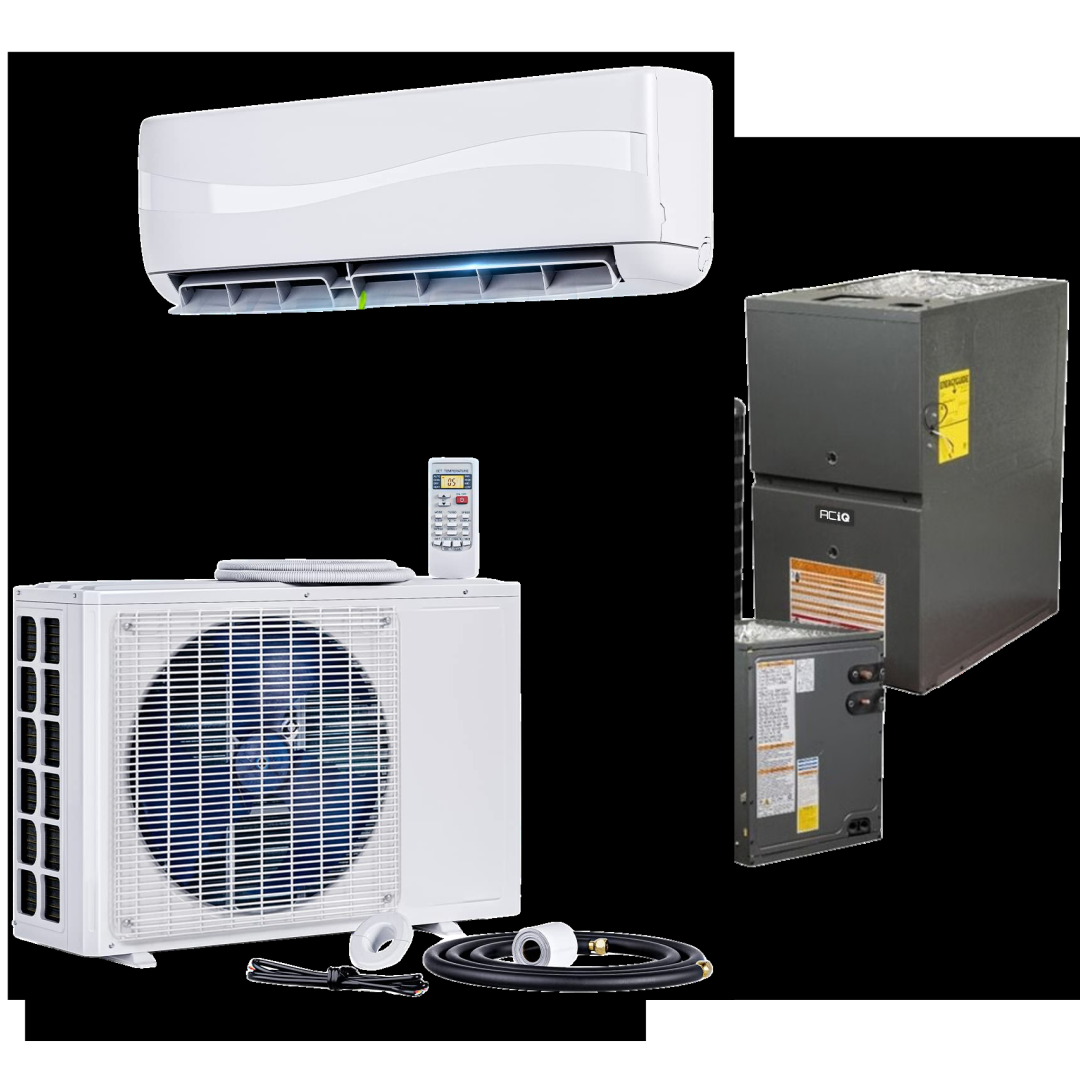
The Two Furnace Options: Gas vs Electric
When comparing natural gas and electric furnaces, it is useful to look at how they perform in terms of efficiency, cost, installation, maintenance and suitability for the Salem climate.
Natural Gas Furnaces
Natural gas furnaces burn methane (or propane) and use a heat exchanger and venting system to extract heat and exhaust combustion products.
Modern high-efficiency gas furnaces can achieve Annual Fuel Utilization Efficiency (AFUE) ratings of 90%–98%.
Pros: Rapid heat production, good for consistent heating loads; often lower per-unit fuel cost (where gas service exists).
Cons: Installation of gas line and venting may raise upfront cost; combustion introduces safety and maintenance requirements (e.g., carbon monoxide checks).
Electric Furnaces
Electric furnaces create heat via electric resistance coils or elements and blow warm air through ducts. Efficiency at the equipment level can approach 100% AFUE since electricity is fully converted to heat.
Pros: Simpler installation (no combustion venting), safer in terms of no gas leaks, potentially lower upfront cost.
Cons: Even with 100% efficiency, the cost per unit of electricity is usually higher than natural gas per unit of heat output; in colder climates or heavier heating loads, lifetime cost can increase.
How to Compare Them for Salem’s Weather
Since Salem’s winters are relatively mild but extended, the decision should factor in usage duration, utility costs, system sizing and insulation quality. Here’s a comparison in a table:
Table — Comparison: Gas vs Electric Furnaces in Salem, OR
Which Option is Best for a Salem Home?
Given the data, here’s how to evaluate for your specific scenario:
If your home already has a natural gas connection: A modern high-efficiency gas furnace is a strong choice in Salem. The consistent moderate heating load makes it efficient and cost-effective.
If your home has electric-only service or you want the simplest installation: An electric furnace can be a good option—especially if your home is well-insulated, uses zoned heating, or if you plan to pair with solar electricity to offset cost.
Consider insulation and heating load: Since Salem’s winter high temps are around 46 °F and lows around 36 °F, the heating load is moderate. Good insulation, proper ductwork, and correct furnace sizing matter as much as fuel type.
Watch utility rates: If your electric rate is high relative to gas rate, the long-term cost of electric heating may be higher.
Think about future trends and upgrades: Consider how each system will adapt to future fuel/energy changes (e.g., renewable electricity, decarbonization of gas supply).
Steps to Make the Right Choice
Calculate heating load: Have an HVAC professional perform a Manual J or heat-load calculation.
Check existing infrastructure: If you already have gas service and venting, choosing a gas furnace might be more straightforward.
Compare installation + operating cost over time: Consider upfront cost plus projected utility bills over 10–15 years.
Determine maintenance commitments: Gas systems require combustion checks; electric systems are simpler but still benefit from annual tune-ups.
Consider comfort features: Zoning, variable-speed blowers, and smart thermostats work with both types.
Investigate rebates & incentives: High-efficiency systems often qualify for local incentives.
Think about lifespan: Gas furnaces last about 15–20 years; electric units may last longer but cost more to operate.
A Quick Check for Salem Homeowners
Moderate winter low temperatures → less extreme heating loads.
If gas is cheaper in your area than electricity, gas likely remains more cost-effective.
If planning solar or going green, electric may align better.
If you don’t have a gas line or venting, electric wins on simplicity.
Both systems can deliver reliable warmth with correct setup.
Conclusion
For homeowners in Salem, Oregon, selecting between a natural-gas furnace and an electric furnace comes down to your existing infrastructure, fuel costs, insulation quality and long-term goals. In many typical Salem homes with gas access and moderate winter conditions, a high-efficiency gas furnace offers strong value and performance.
However, an electric furnace is a fully viable alternative, especially in well-insulated homes, homes without gas service, or for those committed to electric-only or clean-energy paths.
See More Blogs
No blogs found
No blogs found
5+ Star Local Reiveiws
Rated by 112+ Homeowners & Businesses in Salem & Keizer, OR and Surrounding Areas
Rated by 112+ Homeowners & Businesses in Salem & Keizer, OR and Surrounding Areas
Time and time again. Eliseo and his team are some of the best folks to work with. I had some issues with the heater some how shutting off and having issues with the thermostat. But they got it all fixed and put in a new thermostat and it resolved all those problems! They made sure I was aware of the issues and took care of me like one of their own! 100% definitely recommend anyone trying to get anything done with honest and reliable service.


Great service and Communication. Was able to get an appointment next day for maintenance on our furnace.

Very Knowledgeable tech came by and explained more about my HVAC system than thee others that have come by recently. Liked the detail.

Eliseo Cortes (HVAC Ministries) was incredible. He walked me through the entire install, explaining each aspect of the install. His guarantee for a job done right is as good as his name. His cost to me was very reasonable and the workmanship was impeccable. I will have him service my HVAC needs in the future. He is a people person and I found working with him a real pleasure.

Superior work, above and beyond service, respectful of my home. Great deals, friendly.

I would totally recommend Hvac Ministries because they are professional, knowledgeable, and reliable. Elisio and his team did a marvelous job, they arrived early, took a look at the old system and gave honest advice, were able to replace the entire system within a short time, their work is efficient and now our system is working great.

This platform has revolutionized our business operations. The seamless integration and powerful features have helped us scale our marketing efforts efficiently while maintaining excellent customer relationships.

John did a thorough check on my furnace system. I really appreciated his superb knowledge and expertise of my older unit. He took the time to educate me on what to look for as indicators to a potential problem with the unit. It helps me stay on top of one of the big components of the home.

This platform has revolutionized our business operations. The seamless integration and powerful features have helped us scale our marketing efforts efficiently while maintaining excellent customer relationships.

Eliseo and his partner came on Friday and did a thorough examination of our furnace and we decided that a new furnace would be preferable to repairing the problems in the old furnace. They were willing to come back the next day (Saturday) to do the work which they did and all is working great now. They were very professional and cleaned up everything before leaving.

Great prices and even better turnaround times these guys are amazing

Very professional and they always communicate.

Highly recommend Hvac Ministries!! They came to my rescue and fixed my mini split in my business! God bless your business 🙏

Our whole Ac system broke and they were able come the very next day and get it all replaced with such short notice!! did an amazing job and my house has never felt better!! 10/10

Amazing service and very fast! Best AC I’ve ever had.


We offer expert HVAC services to keep your home or business comfortable year-round. Our team ensures reliable repairs, installations, and maintenance.
Our Service Areas
Salem
Keizer
Wilsonville
Tigard
Beaverton
Portland
Woodburn
Silverton
Quick Links
Hours of Operation
Mon - Sat : 8AM -4:30 PM
WE OFFER A 10-YR WARRANTY
Give us a call to learn more and to schedule your service.